
About SC²
SC² is a member-based nonprofit comprised of scientists working with local people to assess, plan for, and adapt to climate-related impacts in the Skagit basin. At SC² we are committed not only to providing climate science research about the Skagit River and surrounding ecosystems, but also ensuring the public have access to how this research impacts their work, homes, and lives.
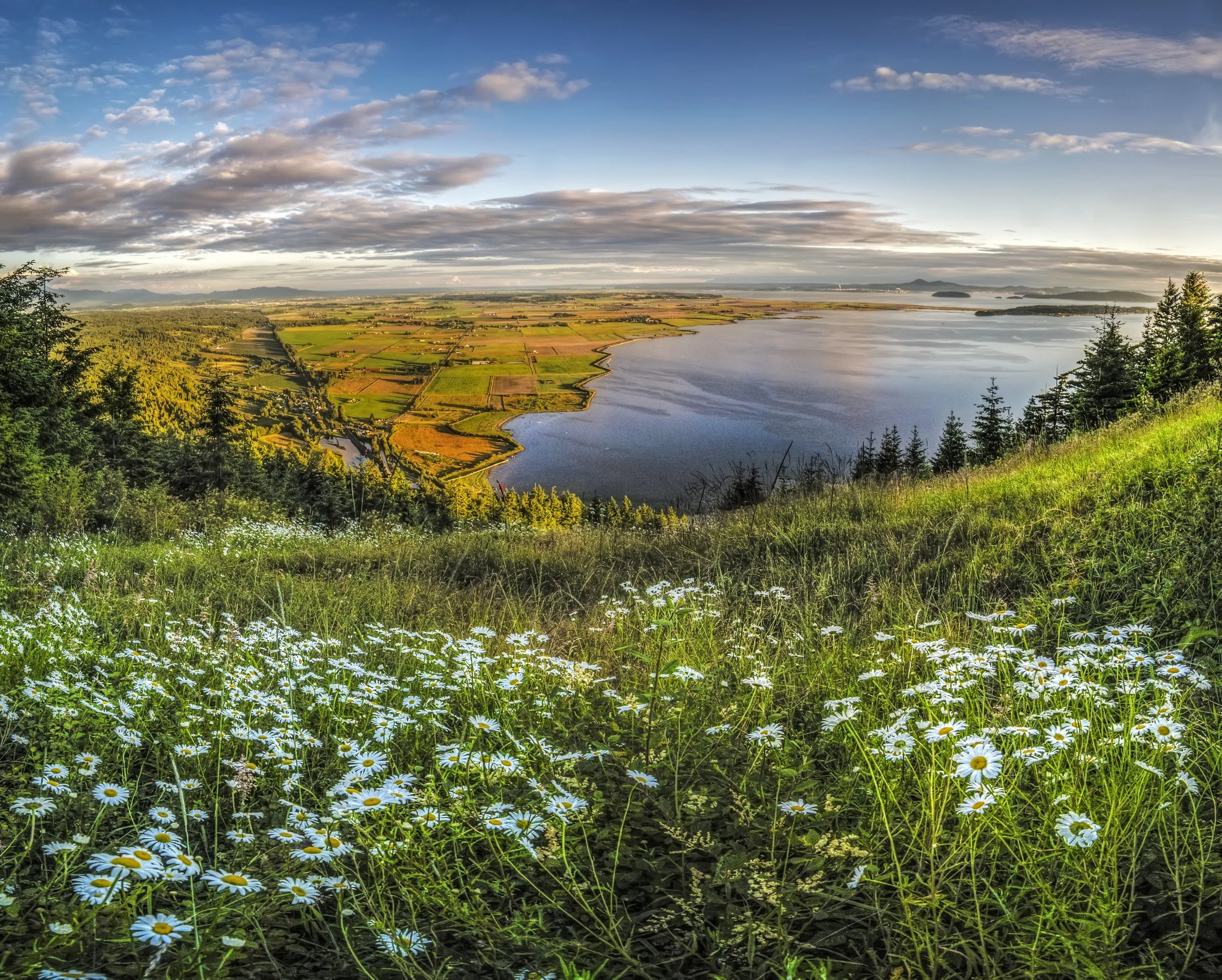
Bow and Edison, Samish Overlook
© Andy Porter
Our Science
We are dedicated to high-quality, objective science that can be used confidently by Skagit basin communities, leaders, stakeholders, and decision-makers. We seek to make our findings available online and to publish in peer-reviewed publications for evaluation by scientists and other interested parties.
As a science-based organization, our mission is to provide credible, relevant information to decision-makers and others throughout the community so they can make informed decisions about their future. We do not advocate for officials, landowners, or other stakeholders to use the information to make any particular decision.
Science as a Tool for Resilience
SC²’s theory of change is that quality, credible, integrated, locally-based, decision-maker ready climate science information enables community members focused on action to increase both the level and quality of their actions, resulting in a more resilient community.
We believe that producing trusted, useful climate science at the local scale is the best means to foster meaningful discourse and action.
Trusted and useful science means producing peer-reviewed, locally important, and on-the-ground validated information. Furthermore, we believe continued learning, listening, and improvement are a fundamental basis for scientific excellence.

Dome Peak, Glacier Peak Wilderness
© Wyatt Mullen
History
The Consortium began forming in 2009 as a result of conversations among staff at Seattle City Light, the Swinomish Indian Tribal Community, and the Climate Impacts Group at the University of Washington. Leaders in these organizations convened a meeting and subsequently a workshop with climate research scientists and others to discuss Skagit climate research and findings. Through these discussions we began to see how the research we had been conducting separately could be improved by working more closely together.
For example, Dr. Jon Riedel’s research on glaciers was an important component to Dr. Alan Hamlet’s research on changes in river flows. Dr. Eric Grossman’s research on the movement of sediment down the Skagit River was influenced by Riedel’s and Hamlet’s findings on the retreat of glaciers and the changing hydrology. Where Grossman’s sediment was deposited had tremendous implications for Dr. John Rybczyk and Dr. Greg Hood’s research on changing plant communities in the Skagit Delta and Padilla Bay. Grossman’s research also had implications for Dr. Ed Conner who supported Seattle City Light’s dam operations. Modeled changes in the amount and timing of the water coming down the Skagit and the pressures of the tides pushing water up the Skagit had significant implications for Dr. Tarang Khangaonkar’s modeling work on the floodplain.
As a vision for integrated climate research in the Skagit basin began to emerge, we sought joint funding to improve and integrate our research and support the development of an organization we came to call the Skagit Climate Science Consortium (SC²), which formally incorporated in 2013. As our conversations evolved we realized that in addition to our commitment to conducting high quality research, we are also committed to making our findings available to local planners, decision-makers, habitat restoration organizations, and others while working interactively with the local community to ensure our findings were relevant and usable.