
Resources
Below you’ll find a variety of resources including climate modeling tools, educational summaries, videos, and our presentation library
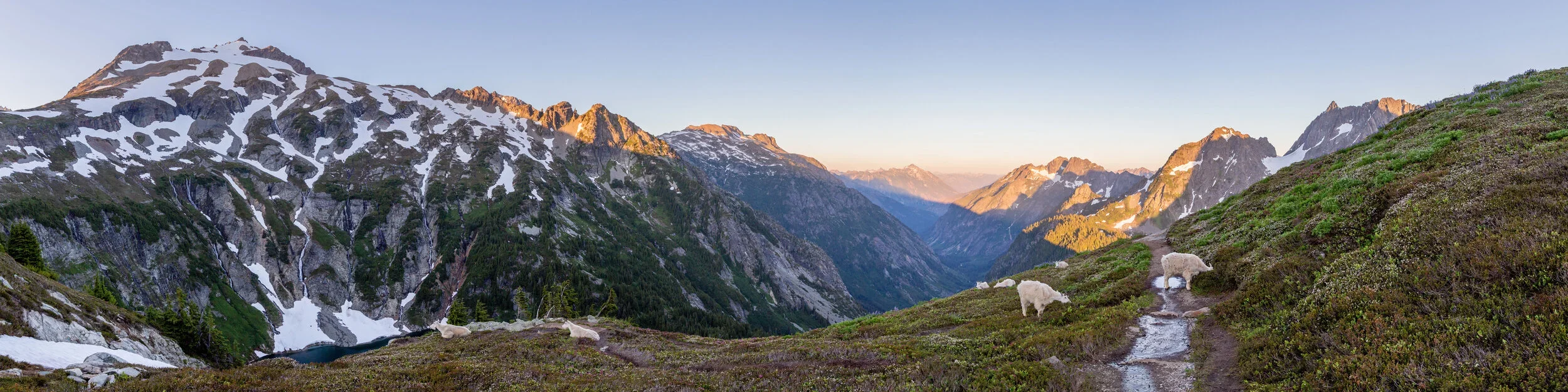
Mountain Mountain Goats, North Cascades National Park
© Wyatt Mullen
Skagit Climate Tools
-
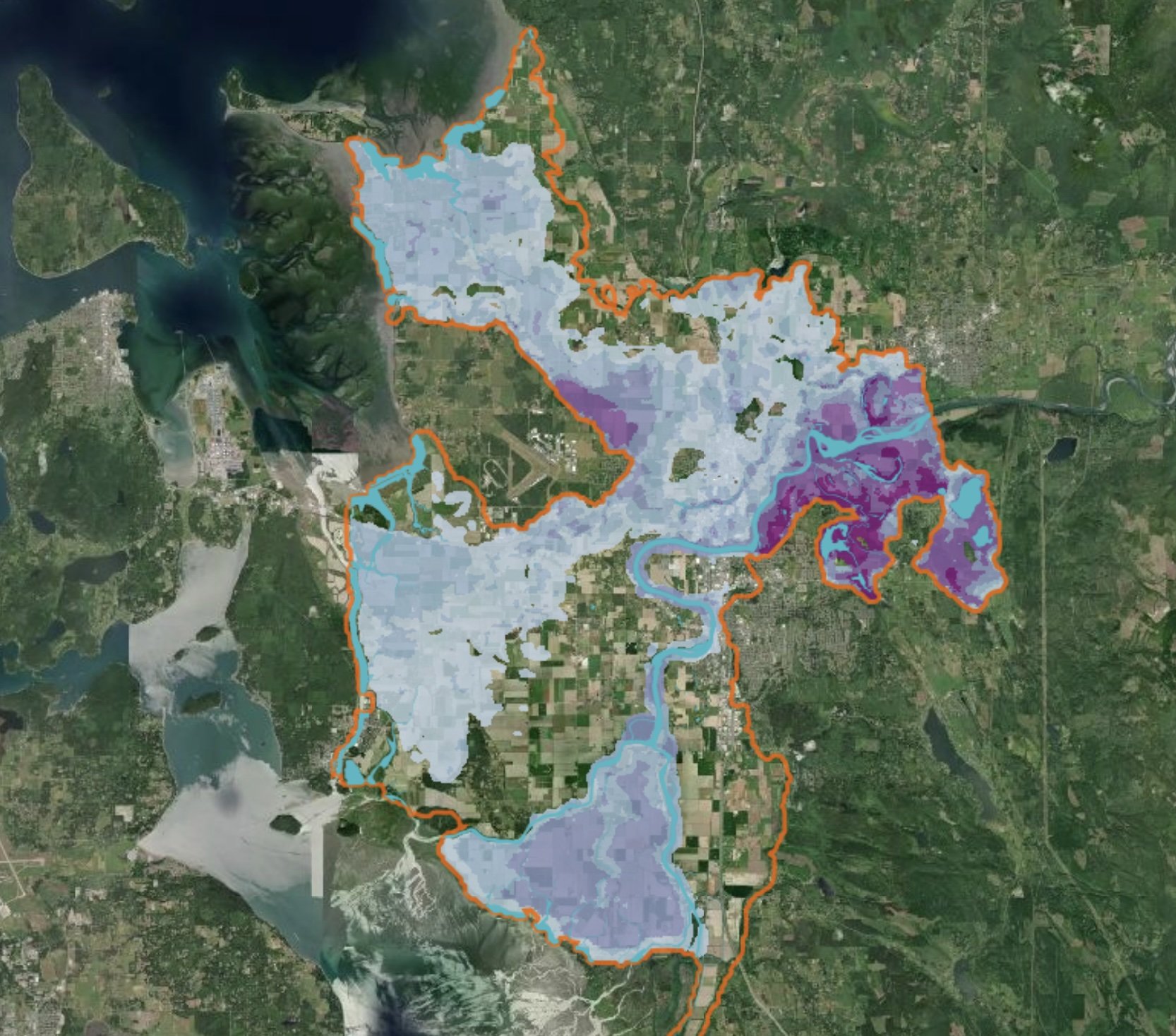
Skagit Flood Map Scenario
Explore potential flood scenarios and their affect on the Lower Skagit Watershed
-
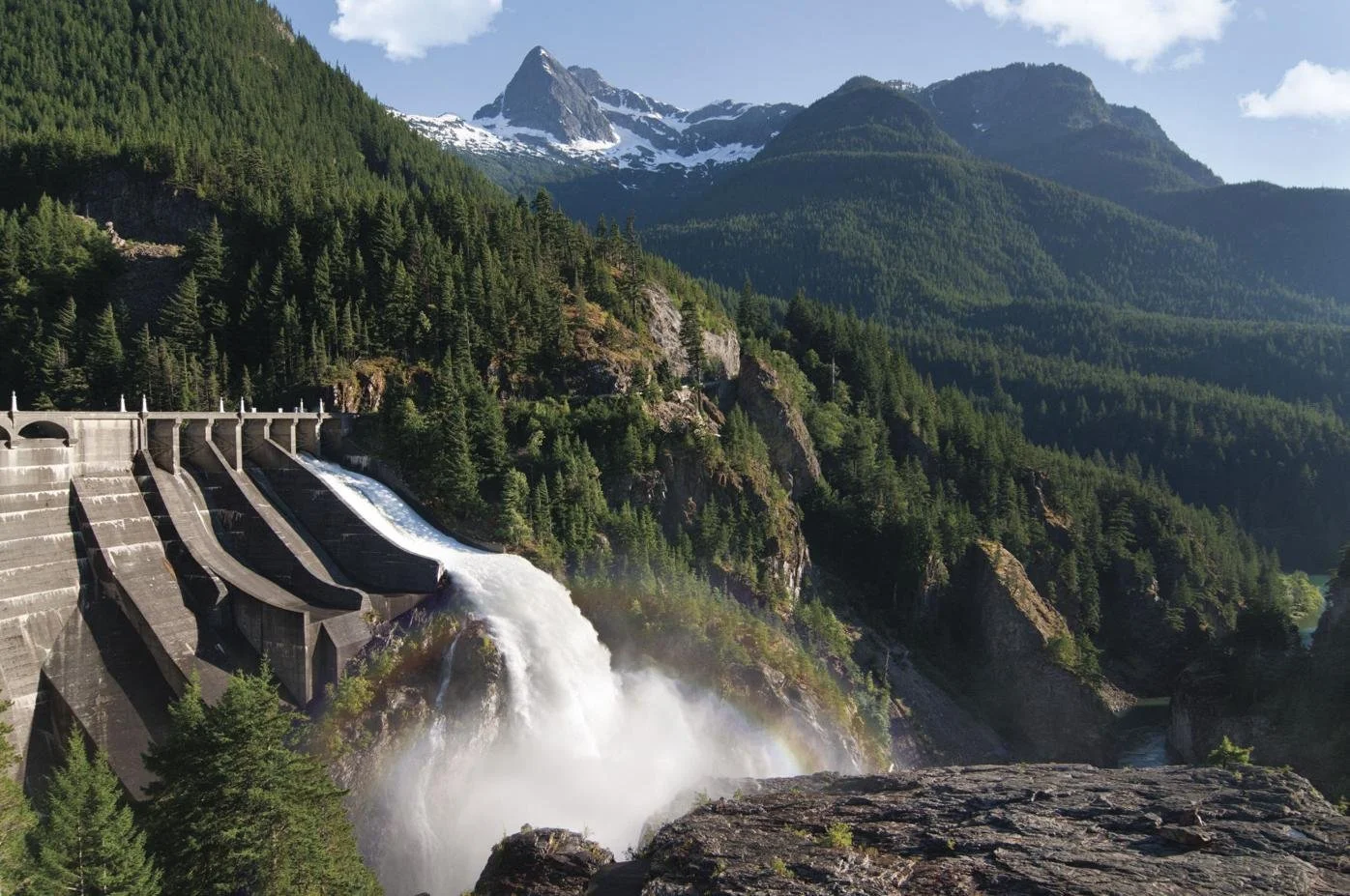
Projected Changes in Streamflow Visualization
Modeling projected changes in streamflows at 20 locations in the Skagit Watershed
-
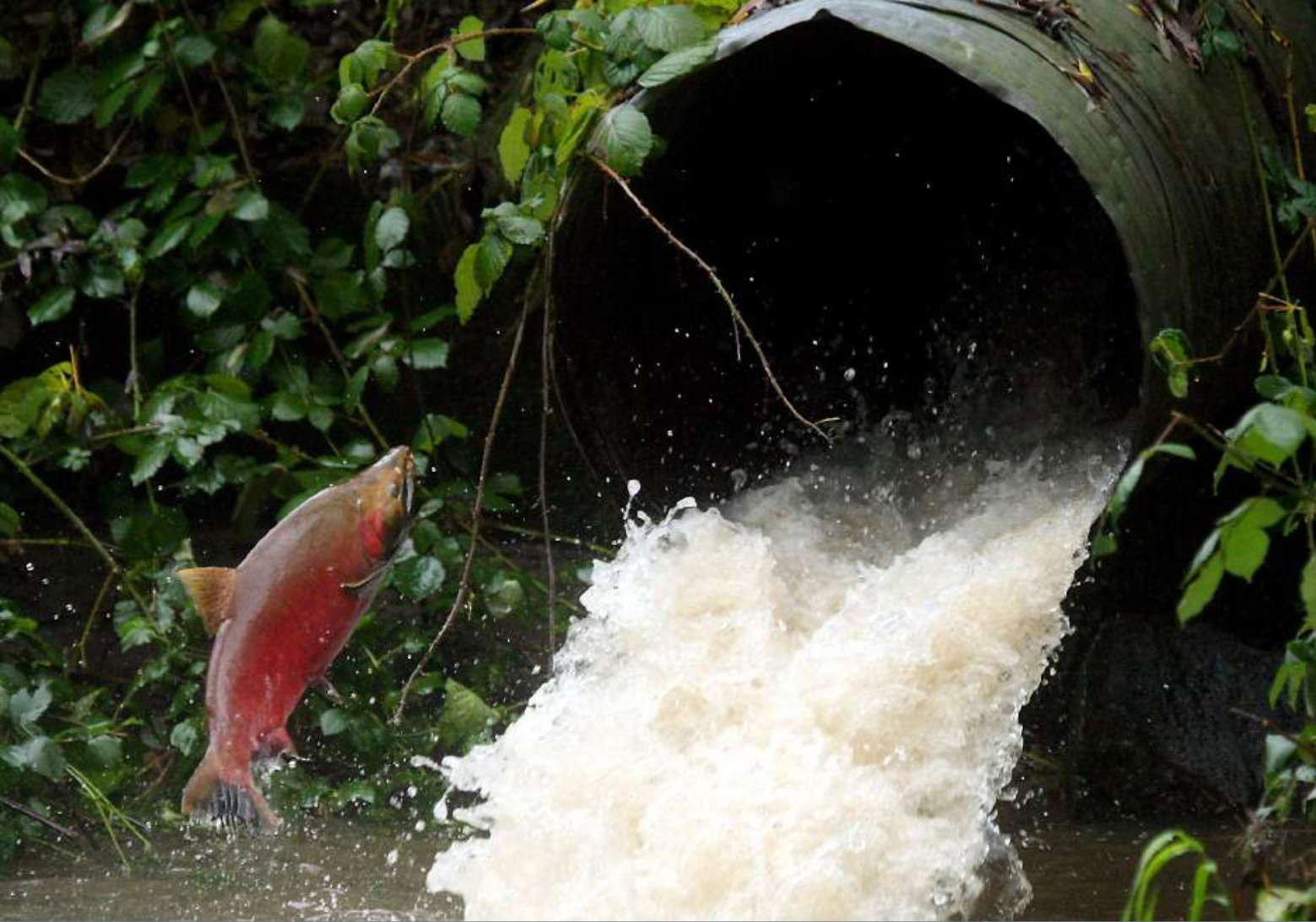
Climate Robust Culvert Design
Probabilistic estimates of fish passage impediments for Washington
-
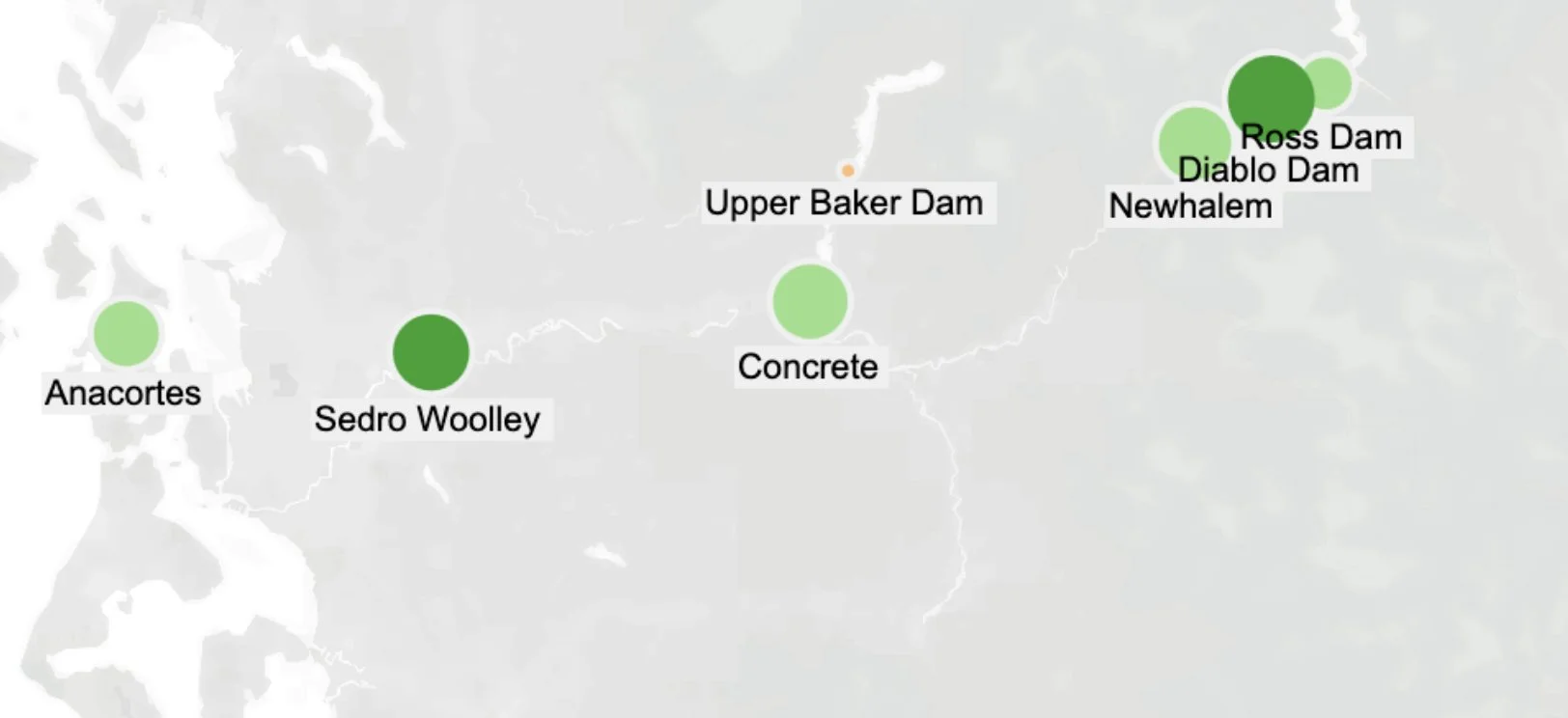
Historical Climate Trends
Historical observations of precipitation, temperature, snowpack and streamflow by Seattle City Light
Educational Summaries
-

-

-

Hydrology & River Flow
-
Flooding
-

Drinking Water
-

Glaciers & Snowpack
-

Sediment
-
Delta Ecosystems
-

About SC²
Videos
Presentation Library
Geomorphology Dialogue #2
-
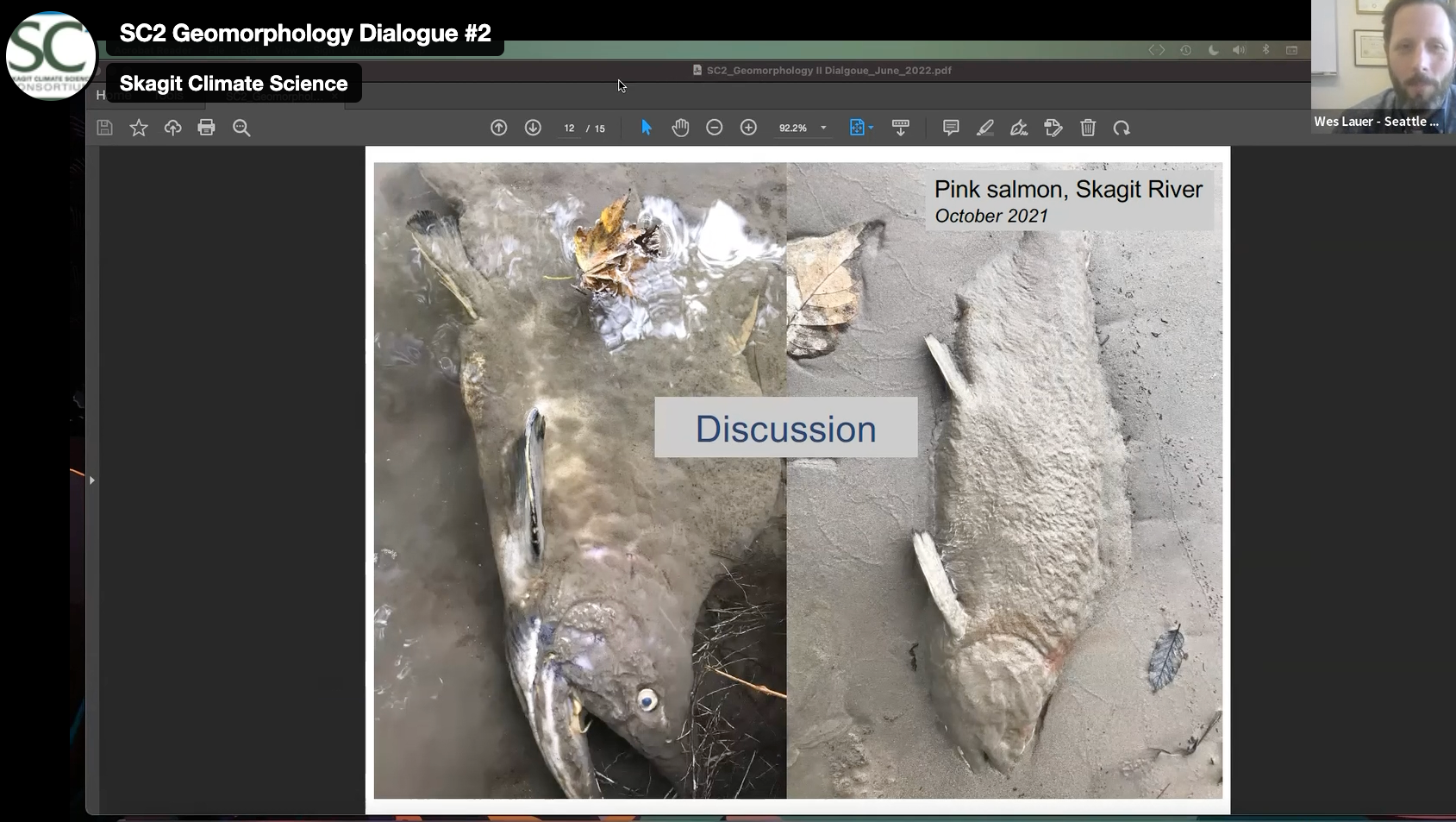
SC² Geomorphology Dialogue Series #2
See the complete dialogue series including:
Sediment & Sauk-Suiattle River with WWU's Alison Pfeiffer
Middle Skagit Rivers Sediment Production & Deposition with former NPS Jon Reidel
Sediment Storage Dynamics in Lower Sauk River Watershed with USGS Scott Anderson
Q&A with all presenters
June 2022
(1 hr 50 mins)
-
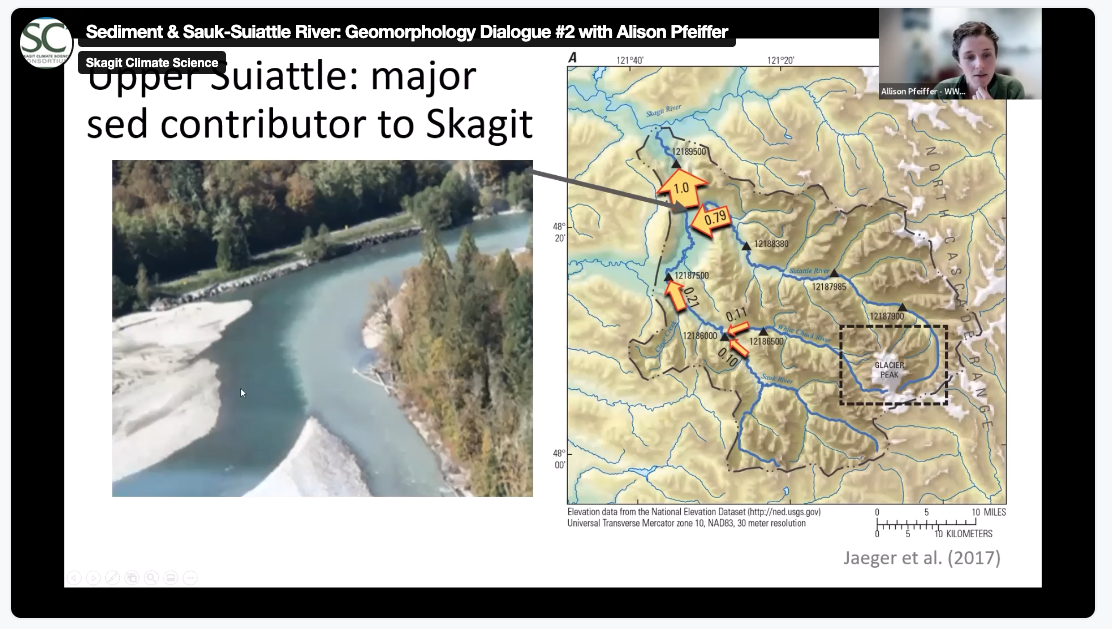
Sediment & Sauk-Suiattle River
SC² Geomorphology Dialogue #2 Segment with Alison Pfeiffer
June 2022
-
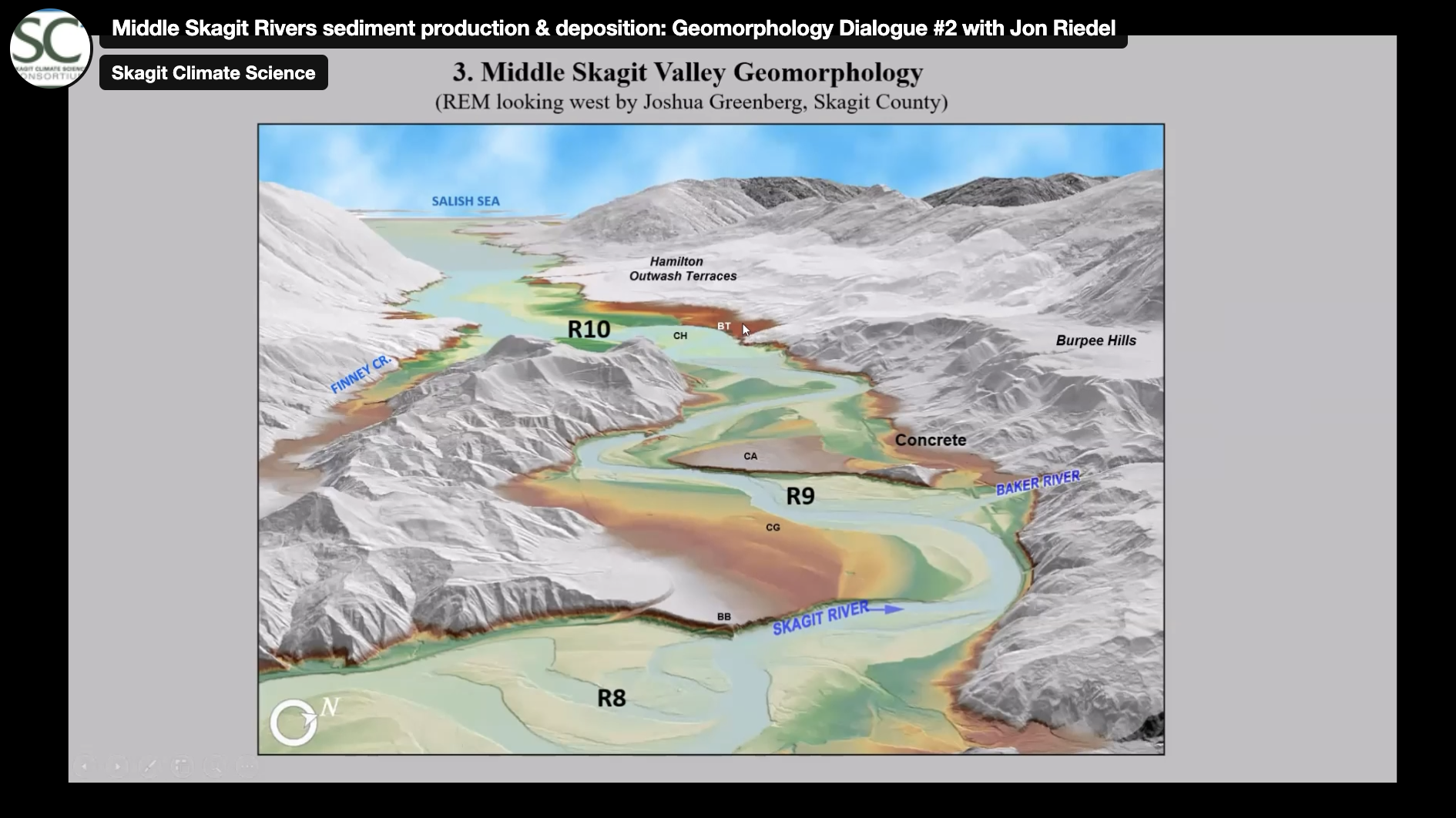
Middle Skagit Rivers Sediment Production & Deposition
SC² Geomorphology Dialogue #2 Segment with Jon Riedel
June 2022
-
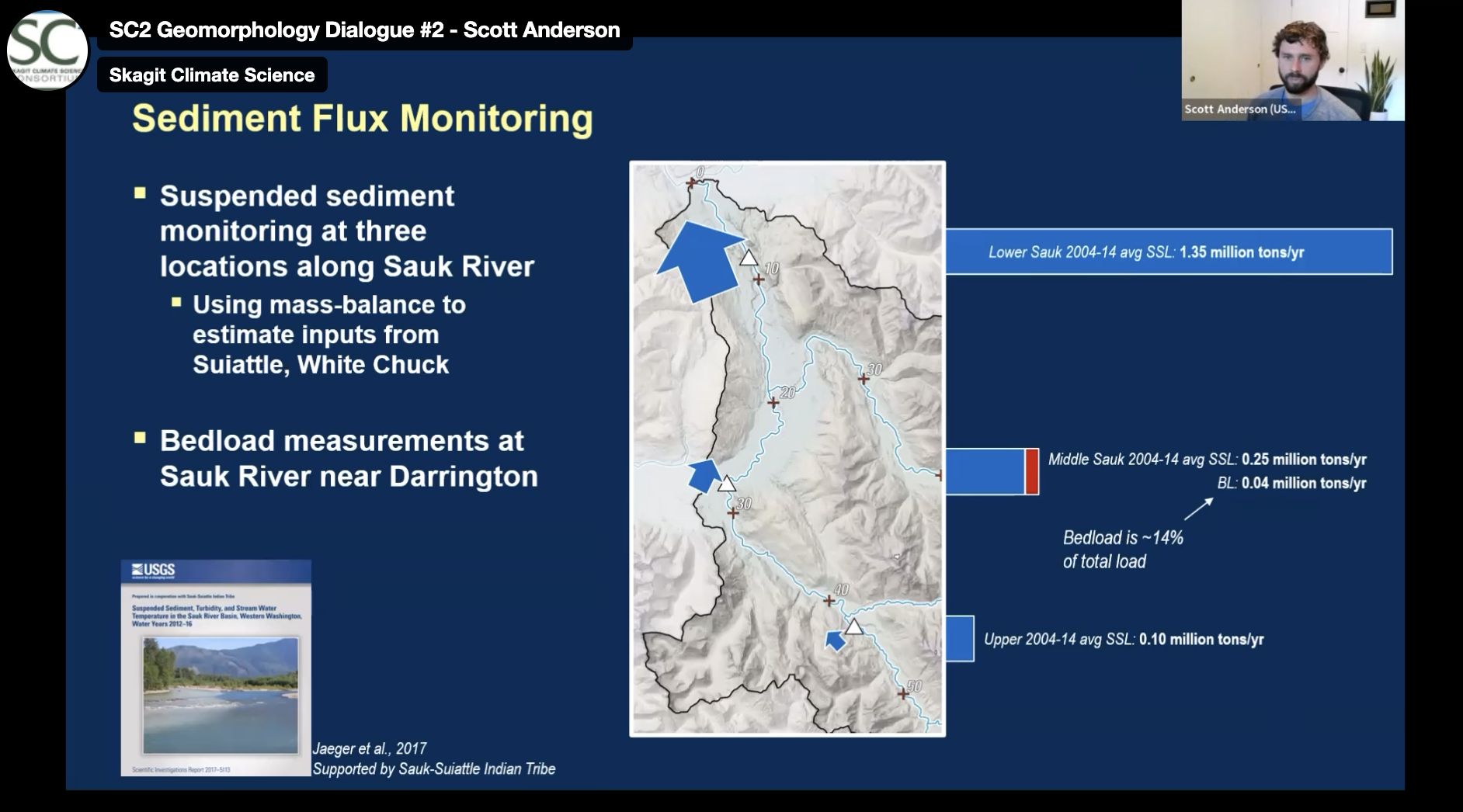
Sediment Storage Dynamics in Lower Sauk River Watershed
SC² Geomorphology Dialogue #2 Segment with Scott Anderson
June 2022
Forest Ecosystems Dialogue
-
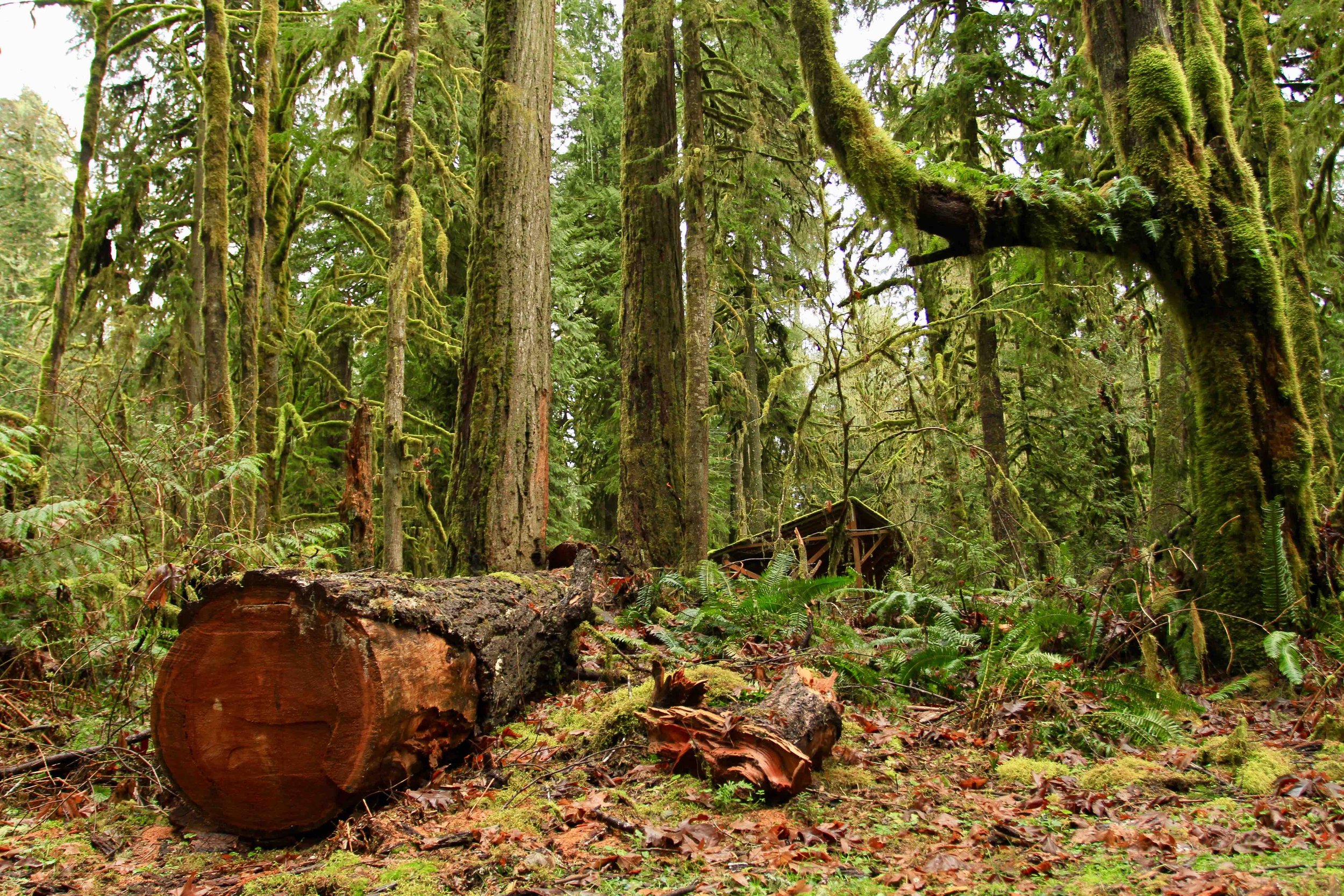
SC² Forest Ecosystems Dialogue
See the complete dialogue series including:
Climate Change and Wildfires in the Northwest with UW Climate Impacts Group Crystal Raymond
Options for Adapting Forest Tree Species Composition in a Changing Climate with Seattle Public Utility Forest Ecologist Rolf Gersonde
Climate Change Across Mt. Baker-Snoqualmie National Forest with NFS Correspondent and Ecologist Kevin James
Q&A with all presenters
November 2021
(1 hr 30 mins)
-
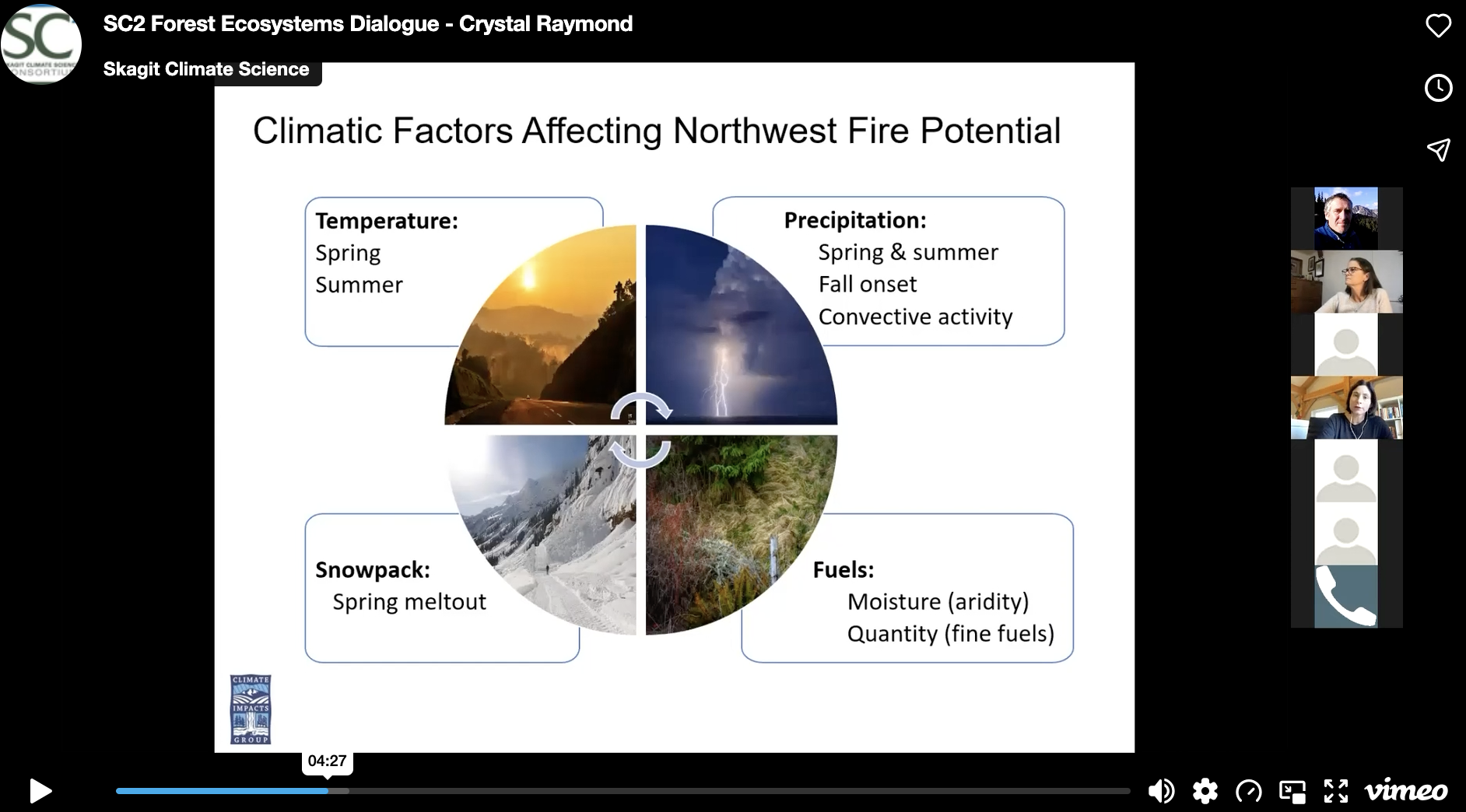
Climate Change and Wildfires in the Northwest
SC² Forest Ecosystems Dialogue Segment with UW Climate Impacts Group Crystal Raymond
November 2021
-
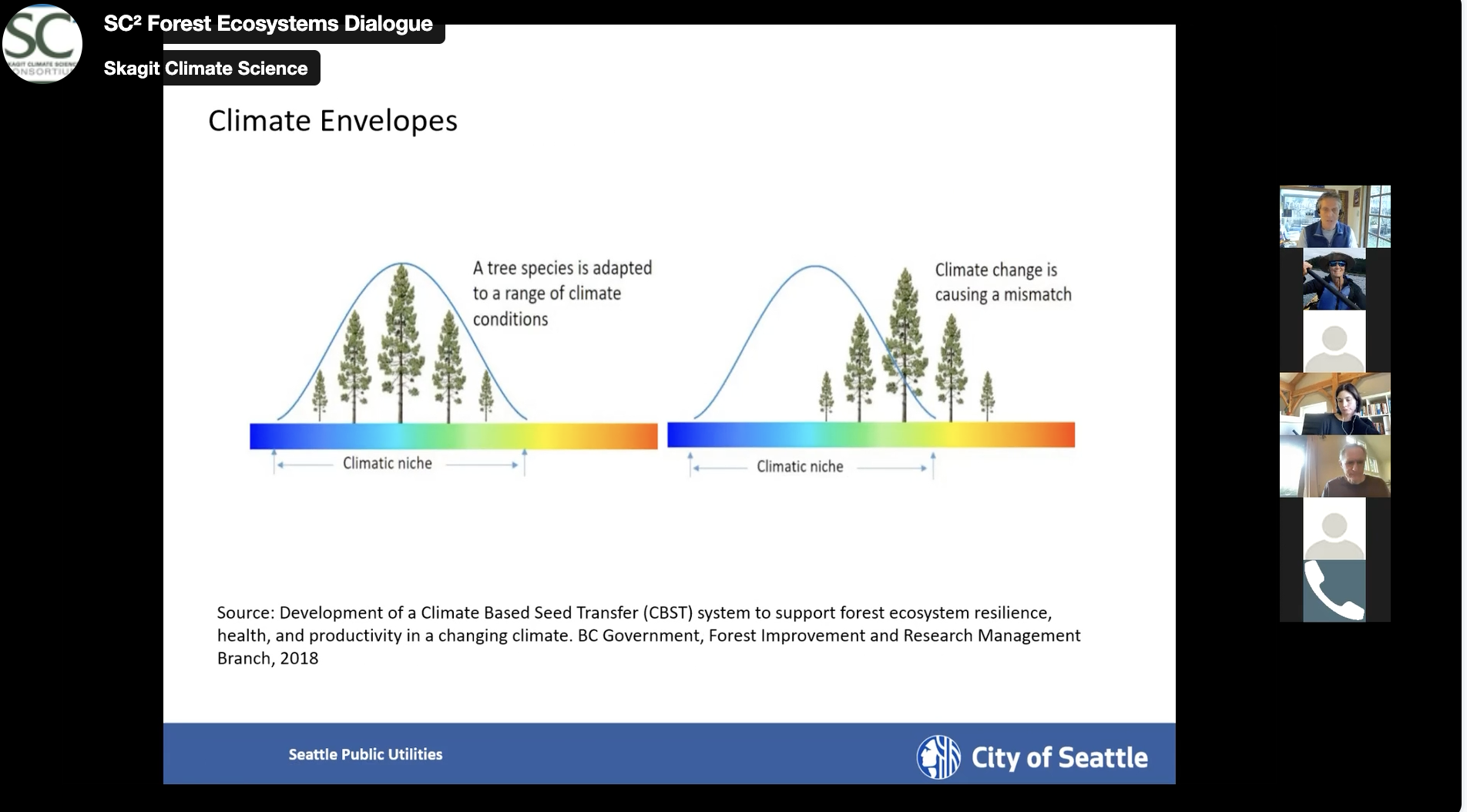
Options for Adapting Forest Tree Species Composition in a Changing Climate
SC² Forest Ecosystems Dialogue Segment with Seattle Public Utility Forest Ecologist Rolf Gersonde
November 2021
-
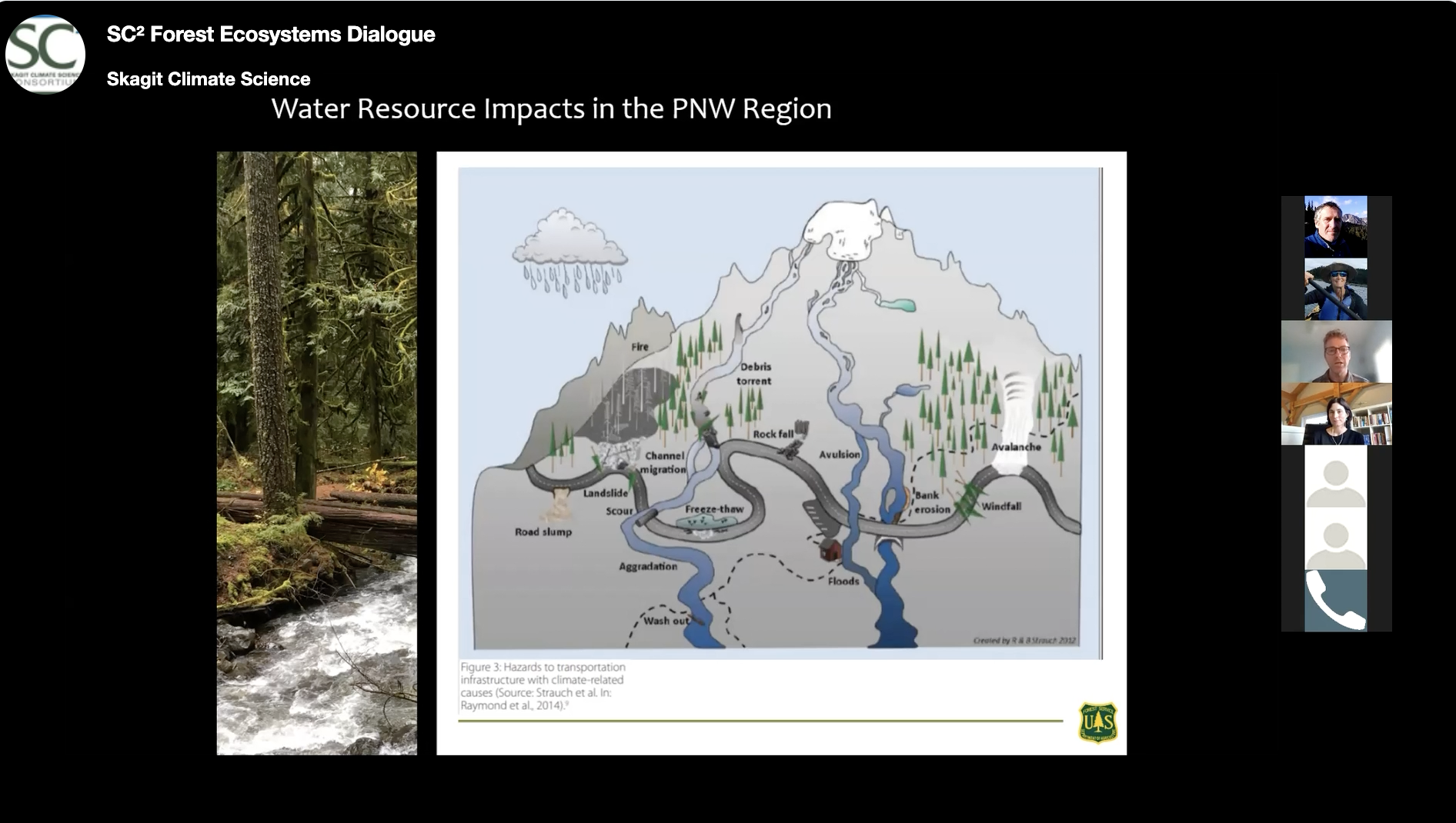
Climate Change Across Mt. Baker-Snoqualmie National Forest
SC² Forest Systems Dialogue Segment with NFS Correspondent and Ecologist Kevin James
November 2021
Geomorphology Dialogue Series #1
-
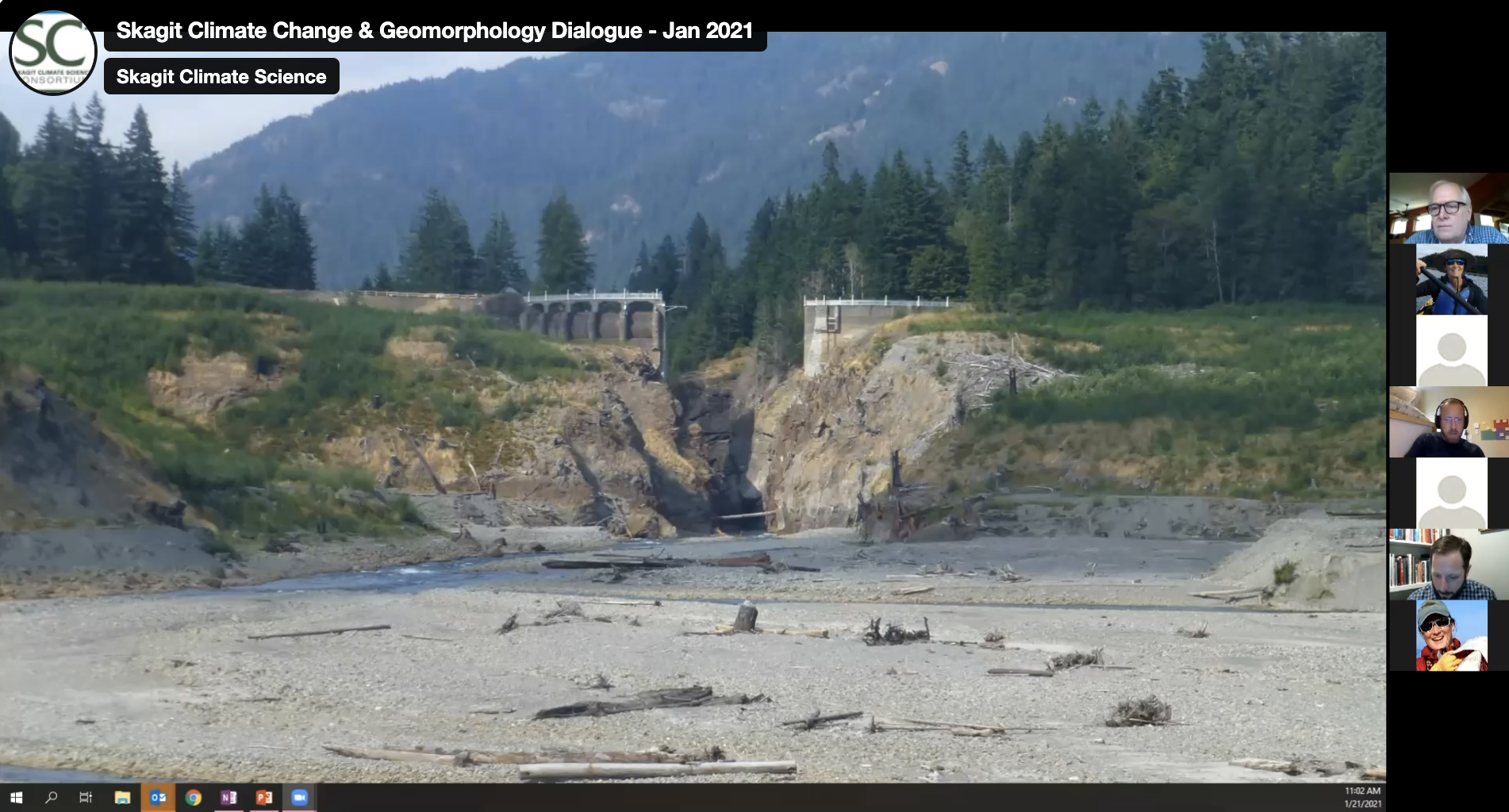
SC² Geomorphology Dialogue Series #1
Estimating the Effects of Forest Disturbance and Regeneration on Summertime Low Flows in Skagit River Tributary Streams with Skagit River System Cooperative’s Gus Seixas
Reach Scale Bed Material Sediment Routing with Off-Channel Sediment Storage with Seattle University’s Wes Lauer
Effects of Projected Climate Change on Stream Temperatures in the Stillaguamish River with WWU’s Bob Mitchell
Q&A with all presenters
January 2021
(1 hr 30 mins)
-
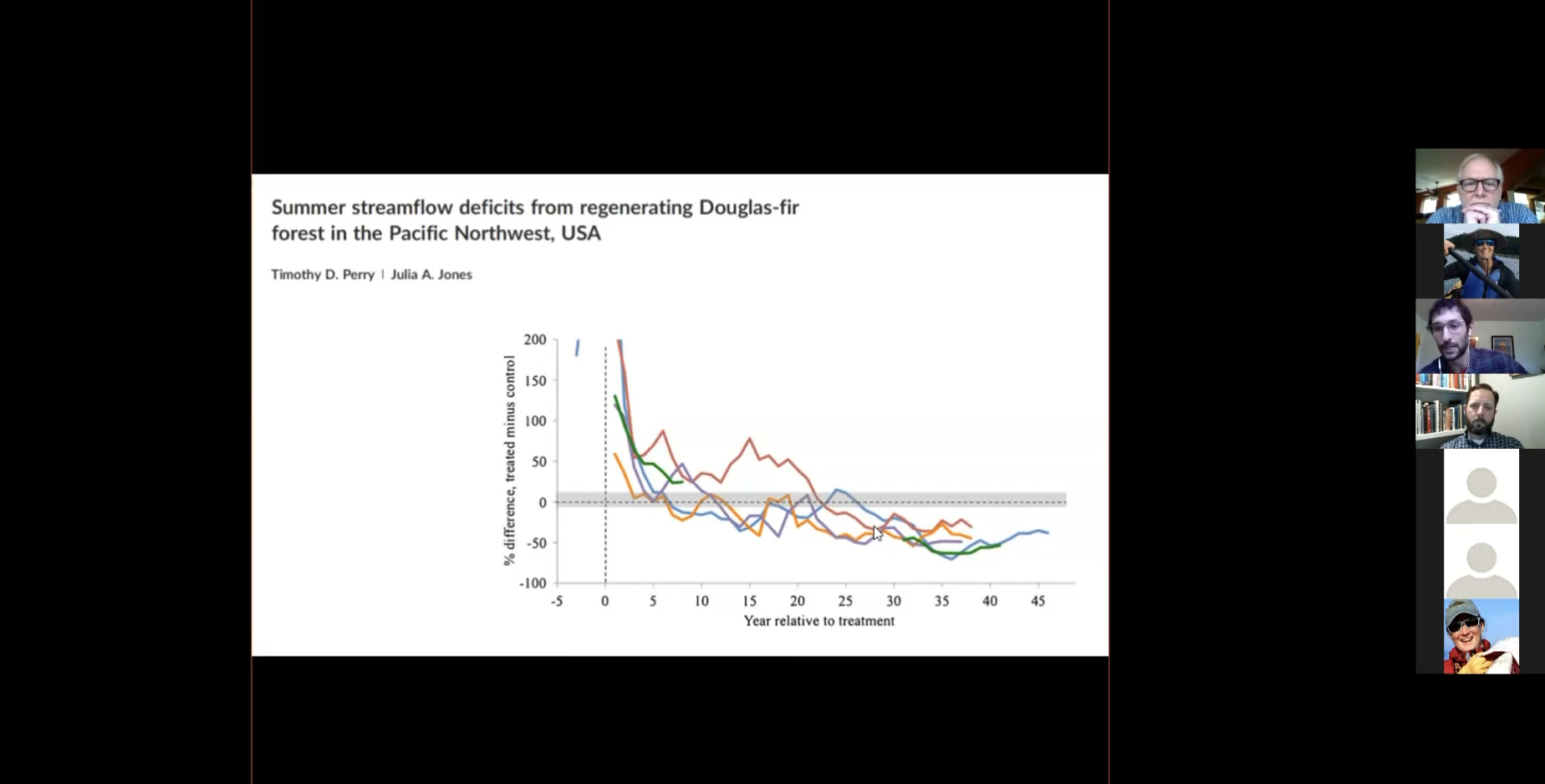
Estimating the Effects of Forest Disturbance and Regeneration on Summertime Low Flows in Skagit River Tributary Streams
SC² Geomorphology Dialogue Series #1 Segment with Skagit River System Cooperative’s Gus Seixas
January 2021
-
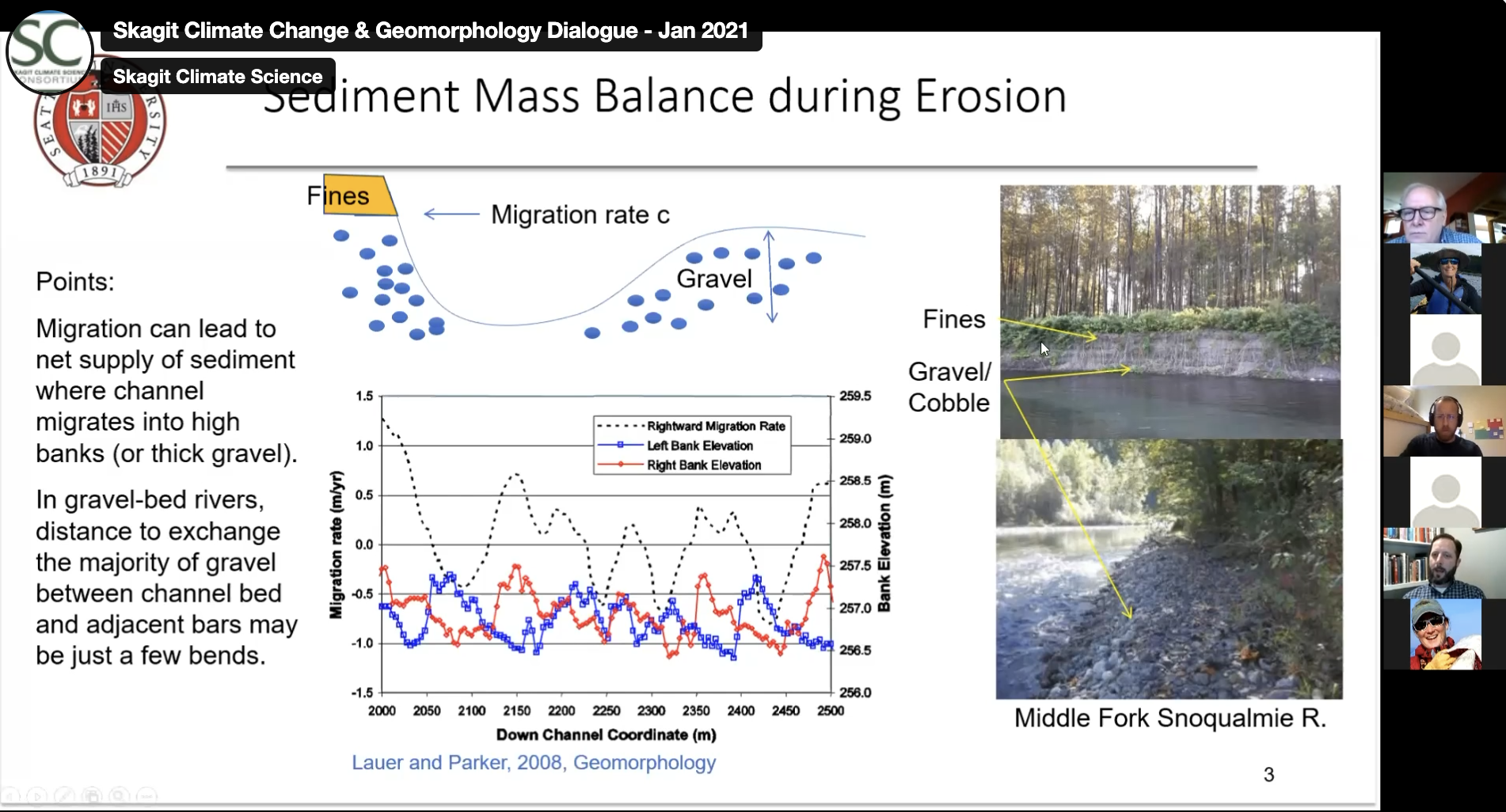
Reach Scale Bed Material Sediment Routing with Off-Channel Sediment Storage
SC² Geomorphology Dialogue Series #1 Segment with Seattle University’s Wes Lauer
January 2021
-
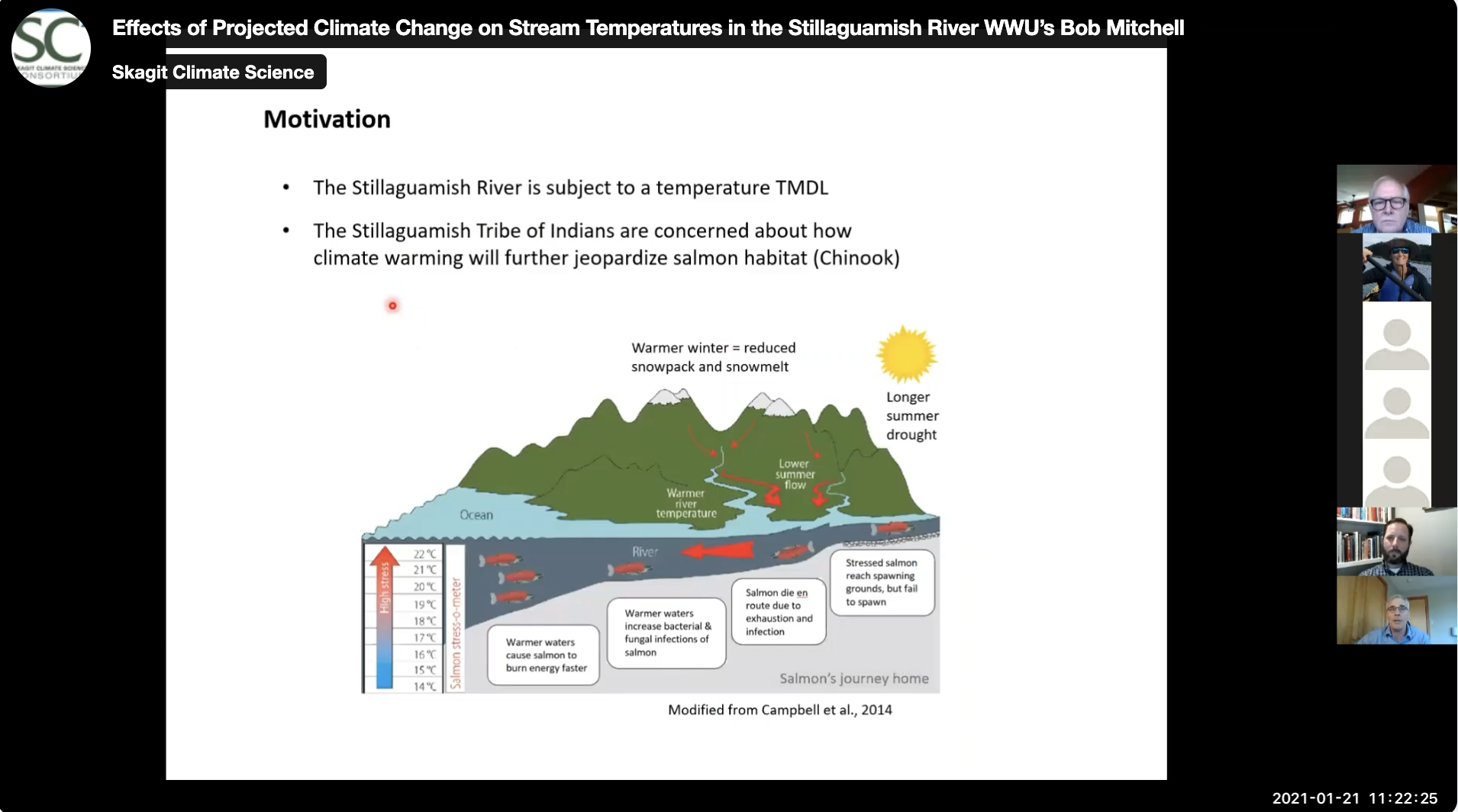
Effects of Projected Climate Change on Stream Temperatures in the Stillaguamish River
SC² Geomorphology Dialogue Series #1 Segment with WWU’s Bob Mitchell
January 2021
External Resources
Intergovernmental Panel on Climate Change (IPCC) is the leading international body for the assessment of climate change. The IPCC was established by the United Nations General Assembly after the United Nations Environment Program and the World Meteorological Organization sought to provide the world with a clear scientific view on the current state of knowledge in climate change and its potential environmental and socio-economic impacts.
Climate Impacts Group (CIG) is an internationally recognized interdisciplinary research group studying the impacts of natural climate variability and global climate change (“global warming”). Research at the CIG considers climate impacts at spatial scales ranging from local communities to the entire western U.S. region, with most work focused on the Pacific Northwest. Through research and interaction with stakeholders, the CIG works to increase community and ecosystem resilience to fluctuations in climate.
Washington State Climate Strategy The state Departments of Agriculture, Commerce, Ecology, Fish and Wildlife, Health, Natural Resources and Transportation worked with a broad range of interested parties to lay out a framework that decision-makers can use to help protect Washington’s communities, natural resources and economy from the impacts of climate change. See the 2012 Washington State Integrated Climate Change Response Strategy report for climate change impacts on Washington.